3-minute read

Pelotonia scholar investigates antibiotic resistance in cancer patients

A Westerville native entering her junior year, Izzy Huth will receive funding through Pelotonia Scholars Program that supports undergraduate researchers working alongside Ohio State faculty on innovative cancer-related research.

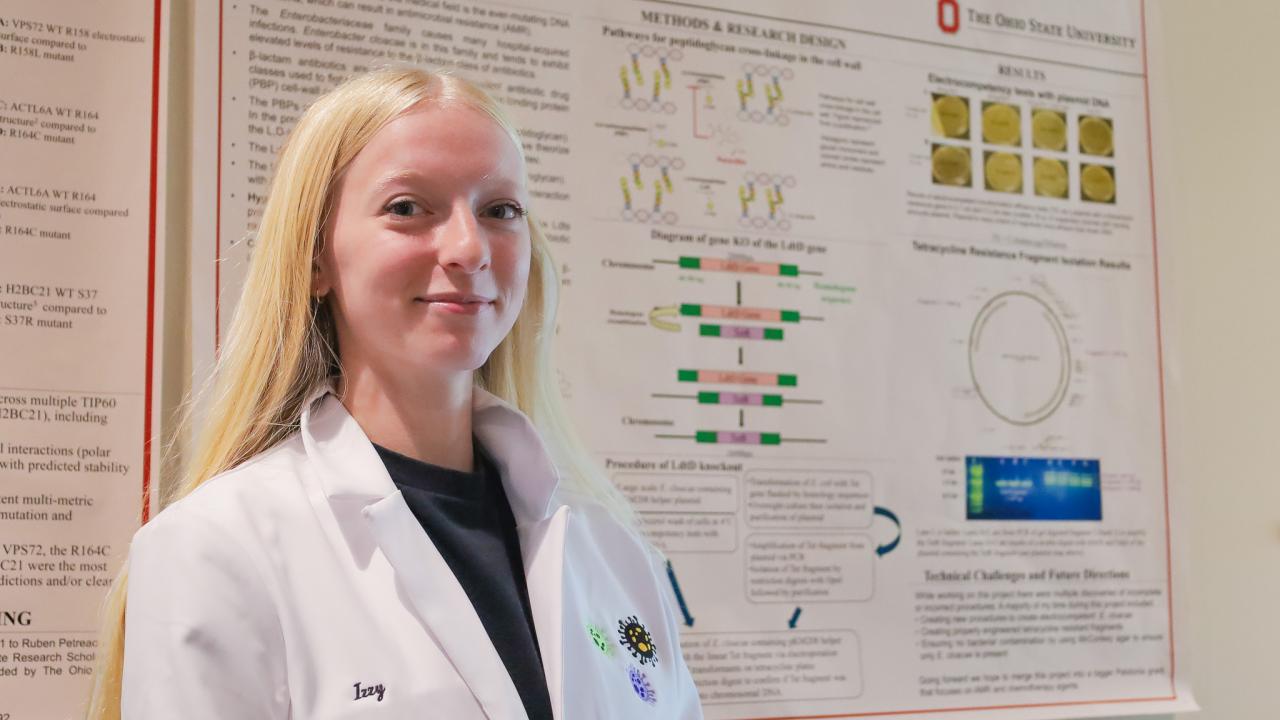
Ohio State Marion biochemistry major Izzy Huth has been awarded a competitive Pelotonia Undergraduate Fellowship, providing support for a year-long research project examining how chemotherapy treatments may contribute to the development of antibiotic-resistant bacterial infections in cancer patients.

A Westerville native entering her junior year, Huth will receive funding through Pelotonia Scholars Program that supports undergraduate researchers working alongside Ohio State faculty on innovative cancer-related research. The scholarship provides compensation of up to $12,000 over one year, allowing students to dedicate significant time to advancing discoveries that could ultimately improve patient outcomes. Huth becomes the eighth Ohio State Marion student since 2018 to earn a prestigious Pelotonia Scholar award supporting innovative cancer research at The Ohio State University.

Working with Ohio State Marion faculty mentors Associate Professor of Chemistry and Biochemistry, Dr. Renee Bouley and Professor of Molecular Genetics, Dr. Ruben Petreaca, Huth is investigating a growing challenge facing cancer patients: antibiotic-resistant infections. While chemotherapy drugs are designed to destroy cancer cells, they can also unintentionally damage healthy cells and bacteria that naturally live in the body.

“Chemotherapy drugs can damage bacterial DNA in much the same way they damage cancer cells,” Huth explained. “When cancer patients also need antibiotics, which is very common because chemotherapy weakens the immune system, those DNA changes can sometimes help bacteria develop resistance to treatment. I want to better understand how and why that happens.”

Her research focuses on Enterobacter cloacae, a bacterial species known to cause difficult-to-treat infections in hospitalized and immunocompromised patients. By studying how exposure to chemotherapy drugs may accelerate bacterial mutations and antibiotic resistance, Huth hopes to identify new ways to prevent or combat these dangerous infections.


“Antibiotic resistance is a major health issue, especially for cancer patients whose immune systems are already compromised,” she said. “If we can understand which chemotherapy drugs contribute to resistance and the biological mechanisms involved, we may be able to identify better treatment approaches and improve patients’ chances of recovery.”


The potential impact extends beyond cancer care. Huth’s work could help scientists develop a deeper understanding of how antibiotic resistance emerges and identify new therapeutic targets to keep life-saving antibiotics effective.

“Overall, this work will help us understand how bacteria become resistant to antibiotics and how we might make them susceptible to treatment again,” she said. “Ultimately, I hope this work can help cancer patients focus on fighting cancer rather than battling severe infections that make that fight even harder.”

Huth’s faculty mentors say her selection as a Pelotonia Scholar reflects both her academic potential and her determination in the laboratory.
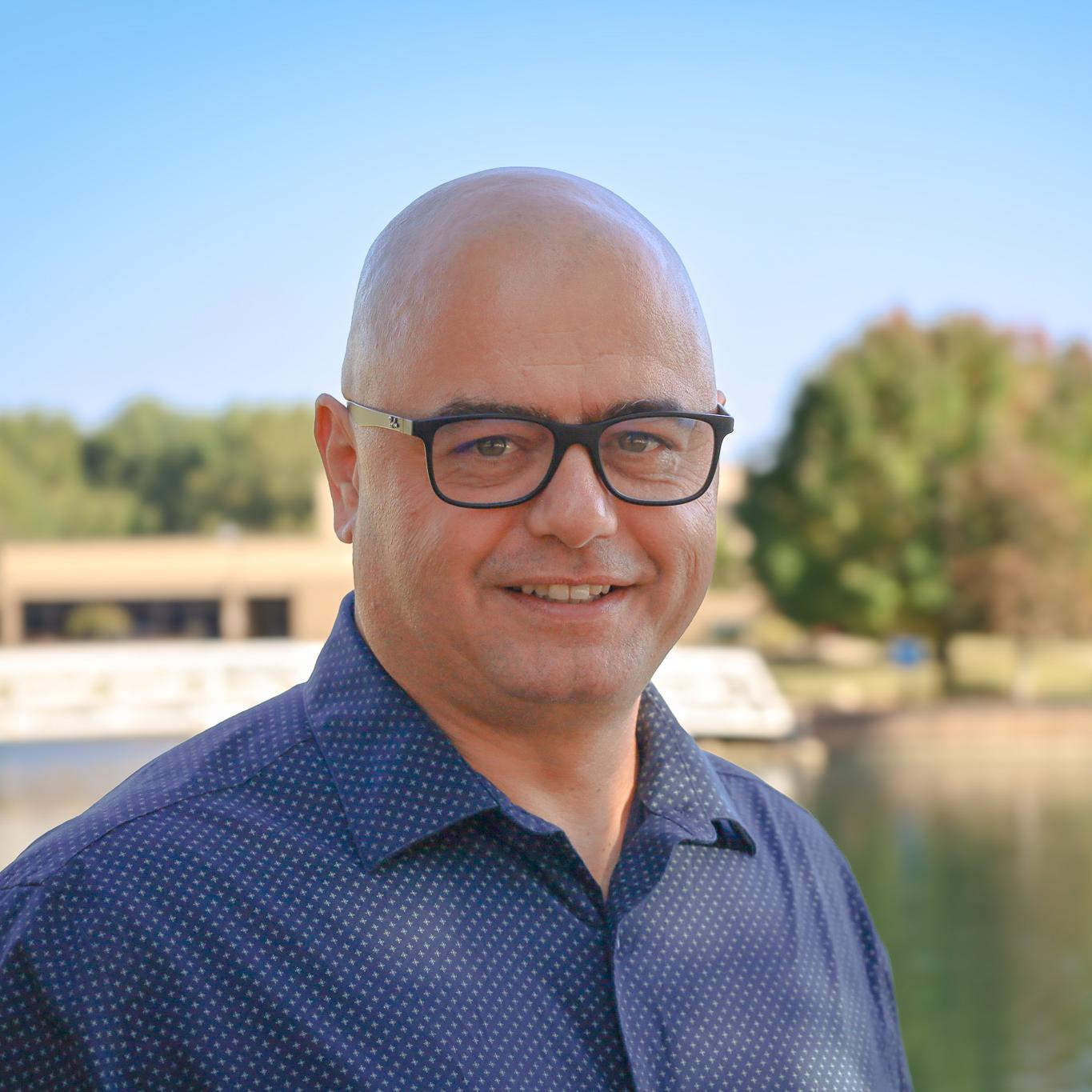

headshot of ruben petreaca

“Izzy is an outstanding undergraduate student with grit and determination to succeed. She intends to go to graduate school and this Pelotonia scholarship will help her further hone her research skills,” said Dr. Ruben Petreaca.

Bouley noted that Huth distinguished herself early among the undergraduate researchers she has mentored.

woman smiling with trees in background

“Izzy got an early start in undergraduate research as a freshman. Even though she is one of the youngest research students I have taken on,” explained Dr. Renee Bouley, “she had a more extensive background in laboratory techniques than the typical student that joined my research lab.”

Bouley added that Huth’s persistence has been particularly evident in the face of research challenges.

“Izzy’s perseverance in research is one of her strongest assets. Her summer research project focused on generating genetic deletions in E. cloacae proved much more difficult than initially expected. She has dealt with countless transformation failures but never gave up and always comes back the next day with new ideas for variables to change for the next round,” Bouley said.


For Huth, receiving the Pelotonia research funds is both a personal achievement and a continuation of Ohio State Marion’s strong tradition of undergraduate research excellence.

“Earning this fellowship gives me some relief about covering day-to-day expenses like groceries and gas, allowing me to focus more on research,” she said. “I also consider it an honor to continue the line of Pelotonia researchers from Ohio State Marion. I’m excited to represent the campus and follow in the footsteps of the incredible researchers who came before me.”

The fellowship also represents an important step toward her long-term career goals. Huth hopes to pursue a future in infectious disease research, potentially working for a university or a federal agency such as the Centers for Disease Control and Prevention or the National Institutes of Health.

“I’ve always known I wanted to study infectious diseases, particularly bacterial infections, but I wasn’t sure how to get there,” Huth said. “My experiences at Ohio State Marion have shown me what that path can look like.”

She credits her faculty mentors and the broader Ohio State Marion community with helping shape her development as a researcher.

“Dr. Bouley, Dr. Petreaca and so many others on campus have helped build my confidence and encouraged me to pursue the future I want,” Huth said. “They’ve challenged me to grow as a scientist, taught me how to navigate setbacks in research and shown me through their actions the type of researcher I hope to become.”

The opportunity to contribute to cancer-related research is particularly meaningful for Huth because it combines her passion for infectious disease research with the possibility of improving the lives of cancer patients and their families.

“To be doing this work allows me to follow my passion for infectious disease research while contributing to research that could have life-saving implications for cancer patients,” she said. “If this research can help give patients more time with their loved ones or make their fight a little easier, that means a lot to me. It’s also a way to help prevent some of the complications I saw during a family member’s battle with cancer.”


Looking back, Huth never imagined this opportunity when she first enrolled at Ohio State Marion.

“I definitely didn’t foresee this when I chose Ohio State Marion, or even after my first year,” she said. “It wasn’t until this past autumn semester that I truly started to consider applying for the fellowship.”

Now, as she joins the ranks of Pelotonia-supported researchers across Ohio State, Huth hopes her story encourages other students to pursue ambitious goals and seize research opportunities.

“More than anything, I’m grateful to everyone at Ohio State Marion who supported and believed in me throughout the application process,” she said. “Their encouragement helped me get to this point, even when I wasn’t sure I had a chance.”

Through the Pelotonia Scholars Program, Huth will spend the coming year contributing to research that addresses two of medicine’s most pressing challenges: cancer treatment and antibiotic resistance while helping advance Ohio State’s mission of improving lives through discovery and innovation.


The Pelotonia Undergraduate Scholars Program at The Ohio State University offers a one-year research award for top undergraduate students interested in cancer research. Open to students from any field, from traditional sciences to engineering, history, and business, the program encourages a multidisciplinary approach to curing cancer. The goal is to engage talented undergraduates early in their careers, offering them a chance to immerse themselves in the critical field of cancer research. Awardees come from a wide range of majors, working on projects that span diverse areas like improving cancer treatment methods and examining social support for cancer survivors. The program is highly competitive, and applications are rigorously reviewed by the Pelotonia Scholars Program Committee. Receiving this scholarship is a significant distinction, enhancing students' prospects for medical or PhD programs. The award provides a stipend of $15 per hour, up to $12,000 annually, enabling students to commit to research without financial strain. Full-time summer research and part-time effort during the academic year are expected.